

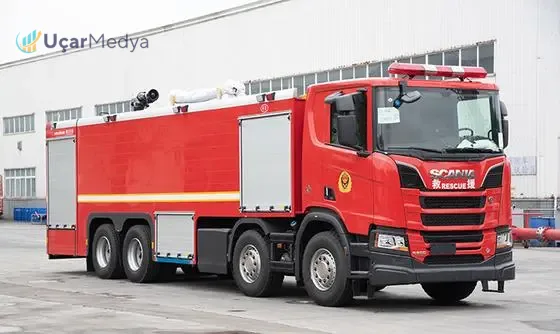
The firefighting vehicle industry salary landscape is undergoing a massive transformation in 2026. As global safety regulations become more stringent, the demand for high-tech emergency response vehicles—from massive airport crash tenders (ARFF) to 60-meter aerial ladders—has never been higher. This surge in demand is directly impacting the compensation packages for the skilled workforce behind these machines.
The Importance of Firefighting Vehicle Industry Salary Trends
Understanding the firefighting vehicle industry salary is crucial for both new graduates and experienced professionals entering this niche sector. Unlike standard automotive manufacturing, this industry requires a deep understanding of specialized engineering, high-pressure hydraulic systems, and complex electronics. Companies that lead this sector, such as those operating in high-tech industrial zones with 200,000 m² facilities, prioritize technical expertise.
- The Importance of Firefighting Vehicle Industry Salary Trends
- Regional Salary Breakdown for 2026
- Factors Influencing the Firefighting Vehicle Industry Salary
- Future Outlook: Why Firefighting Vehicle Industry Salary is Rising
- Detailed Comparison: Standard Automotive vs. Firefighting Vehicle Industry Salary
- The Role of Overtime in Maximizing Your Earnings
- Frequently Asked Questions (FAQ) About Firefighting Vehicle Industry Salary
Regional Salary Breakdown for 2026
When we look at the firefighting vehicle industry salary globally, we see significant variations based on regional economic factors and technical requirements:
1. North America (USA & Canada)
In the US, the average annual compensation for a senior production specialist starts at $65,000. When you factor in the high demand for NFPA-compliant vehicles, the total firefighting vehicle industry salary can exceed $90,000 with overtime.
2. Europe (Germany & Austria)
European manufacturers are the world leaders in ladder technology. A technician in this region can expect a base firefighting vehicle industry salary of €4,500 to €5,500 per month.
3. Emerging Markets (Turkey and MENA)
Turkey has become a global hub for firefighting vehicle exports. For a 22-year-old starting in a major facility, the base firefighting vehicle industry salary combined with extensive overtime (often calculated at 50% to 100% increments) can reach competitive levels, often ranging between 60,000 TL to 75,000 TL net per month.
Factors Influencing the Firefighting Vehicle Industry Salary
Several technical and operational factors determine your position on the firefighting vehicle industry salary scale:
Technical Certifications: Expertise in ICAO and NFPA standards is a major salary booster.
Production Overtime: In large-scale production environments, working late hours (sometimes until 11 PM) or weekends can add nearly 40-50% to your base pay.
Specialized Roles: Warehouse and logistics managers who handle complex spare parts for global exports command higher premiums than general warehouse roles.
Future Outlook: Why Firefighting Vehicle Industry Salary is Rising
The shift toward electric firefighting vehicles and AI-integrated command systems is creating new, high-paying roles. The firefighting vehicle industry salary for R&D engineers specializing in “smart” extinguishing systems has seen a 20% year-on-year increase. As a digital content creator monitoring these trends, I have seen that “expertise” is the only currency that never devalues.
In conclusion, the firefighting vehicle industry salary in 2026 reflects the high level of responsibility and technical skill required in this life-saving sector. Whether you are working in a production line or managing a global website like ucarmedya.com, staying informed about these trends is key to career growth.
Detailed Comparison: Standard Automotive vs. Firefighting Vehicle Industry Salary
It is important to distinguish why the firefighting vehicle industry salary is significantly higher than standard commercial vehicle manufacturing. In standard automotive roles, the production is often mass-scale and repetitive. However, in specialized firms like those producing high-performance firefighting pumps and ARFF vehicles, every unit is often custom-built to meet specific international safety codes.
This customization requires workers to possess advanced problem-solving skills and the ability to operate complex machinery like CAD-CAM systems. Consequently, the “technical premium” added to the firefighting vehicle industry salary ensures that the industry attracts top-tier talent capable of maintaining 1974-level legacy quality with 2026-level innovation.
The Role of Overtime in Maximizing Your Earnings
For many professionals, the base firefighting vehicle industry salary is just the starting point. In high-demand periods, production facilities often run extended shifts. Depending on the company’s internal policies, overtime can be calculated as:
Weekday Overtime: Usually a 50% increase over the base hourly rate.
Weekend/Holiday Overtime: In many corporate structures, this can reach a 100% (double pay) increment.
If your base firefighting vehicle industry salary is around 39,000 TL, consistent overtime can realistically push your monthly take-home pay to the 65,000 – 75,000 TL range, especially in facilities that prioritize meeting global export deadlines.
Frequently Asked Questions (FAQ) About Firefighting Vehicle Industry Salary
1. What is the starting firefighting vehicle industry salary for new graduates in 2026? While it varies by region, new graduates in emerging industrial hubs can expect a competitive starting base, often supplemented by technical training bonuses.
2. Does knowing ICAO or NFPA standards increase my salary? Absolutely. Professionals who are certified or experienced in ICAO (International Civil Aviation Organization) and NFPA (National Fire Protection Association) standards are among the highest earners in the firefighting vehicle industry salary bracket.
3. How often are salaries reviewed in this sector? Most global leaders in this industry perform annual or semi-annual performance reviews, adjusting the firefighting vehicle industry salary based on inflation, technical skill acquisition, and production efficiency.





Bir Cevap Yaz
E-posta adresiniz yayınlanmayacak. Gerekli alanlar * ile işaretlenmişlerdir.